The Nose Mysteriously Returns to Kovalyov’s Face
The NoseThe Nose Mysteriously Returns to Kovalyov’s Face is the abrupt restoration of Major Platon Kovaloff’s missing nose on 7 April. After the nose has appeared independently as a state councillor and resisted Kovaloff’s attempts to recover it, it is found between his cheeks as though nothing had happened. The return restores his face but supplies no cause or explanation, turning the story’s most impossible event into a fact confirmed through ordinary morning routines.
Background and Stakes
Before the loss, Kovaloff’s identity was already carefully staged through title, appearance, and ambition. Though formerly a committee-man in the Caucasus, he preferred to call himself Major, preserving the rank that mattered to him. His clean, stiff collar, seals, and daily walks on the Neffsky Avenue accompany his hope of obtaining a position suited to his status. He would accept a departmental post if necessary, hoped for a vice-governorship, and was willing to marry only a woman with a dowry of two hundred thousand roubles.
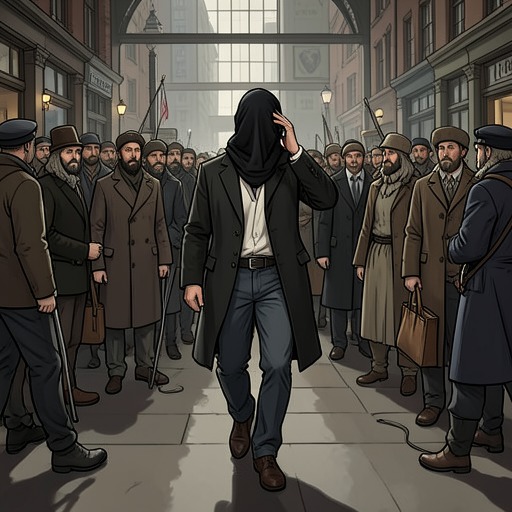
The disappearance therefore threatened more than bodily completeness. Kovaloff connected his nose to the social life he wished to maintain: visits to acquaintances, appearance at parties, and the chance to present himself in respectable company. His missing feature had meanwhile acquired a uniform, a carriage, and the rank of state councillor. When Kovaloff tried to claim it, the nose insisted on its own identity and rejected any close relation, even pointing to the difference between their uniform buttons. Its return reverses this separation, but not the social absurdity that made a body part seem more authoritative than its owner.
The Return on 7 April
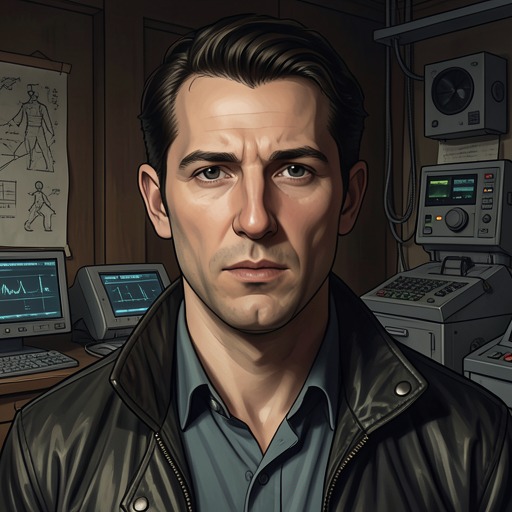
The narration introduces the restoration as a strange event, without offering a mechanism: the same nose that had caused a sensation in town is suddenly back in its proper place. On waking, Kovaloff happens by chance to look into a mirror and sees it. He puts a hand to his face to make sure; the nose is there beyond doubt. The date, 7 April, pins the reversal to a precise morning even as its cause remains entirely obscure.
Kovaloff tests what he sees through a sequence of everyday checks. He calls for water, washes, looks into the glass again, dries his face with a towel, and looks once more. Each action confirms the same result. The narration lingers on repetition not to explain the restoration but to register his disbelief giving way to certainty: the nose has returned, and repeated inspection cannot make it disappear again.
His joy nearly becomes a dance across the room, but Ivan’s entrance interrupts him. Kovaloff then asks his valet to look for a heat-boil on the nose, echoing the boil that had concerned him before its disappearance. He privately imagines the answer he most fears—that the nose itself is still absent—but Ivan reports that he sees no boil. That reply confirms the nose’s presence while also disposing of the immediate worry Kovaloff has raised.
Reversal Without Explanation
The return closes the bodily emergency without repairing the story’s logic. Earlier, Kovaloff had sought help through ordinary channels: an advertisement official refused to publish his appeal, the police commissary received him coldly, and a doctor examined the vacant place but said the nose could not be replaced. The doctor advised him to let Nature take its course and proposed preserving the detached nose in spirits or warm vinegar mixed with brandy. Against those practical refusals and improvised remedies, the actual restoration arrives without intervention, explanation, or visible process.
Nor does the return erase what the separation disclosed about status. The nose had moved through the city in state-councillor’s dress, while Kovaloff insisted on being addressed by the title Major and worried that his condition would prevent visits to socially important acquaintances. The reunion restores the bodily feature on which his appearance depended, but the narrative does not say that the nose’s independent career has been explained or reconciled with him. Its sudden reappearance leaves the impossible event intact rather than converting it into a solvable case.
Narrative Significance
The scene makes ordinary verification carry an extraordinary reversal. Mirror, hand, water, towel, and Ivan’s plain observation are familiar tests, yet they confirm an event for which no account is supplied. Kovaloff’s repeated looking creates certainty about what has happened to his face without creating knowledge of why it happened. The return is therefore both a happy resolution to his immediate bodily distress and a continuation of the story’s refusal to make the bizarre fully intelligible.
Its abruptness also echoes the separation itself: the nose had become an independent public figure, and now it is simply back between Kovaloff’s cheeks, as if nothing had occurred. The restoration ends the absence but does not undo the contrast between a man’s dependence on visible social standing and the startling independence of the feature that embodies it. The ending’s calm, domestic details make the reversal more—not less—strange.